Case studies
Examples of Paul’s work in his corporate and advisory roles demonstrate a diversity of approaches to achieve the best outcomes. Paul believes in harnessing the power of collaboration through being open and inclusive. With his diverse subject matter expertise he can make sure the right stakeholders are engaged and with his integrity drive meaningful results. Examples include: digital platforms for decarbonise new and existing buildings; measuring social value; establishing regenerative design frameworks; establishing corporate sustainability visions and strategy; and city level measurement of UN sustainable development goals for London.
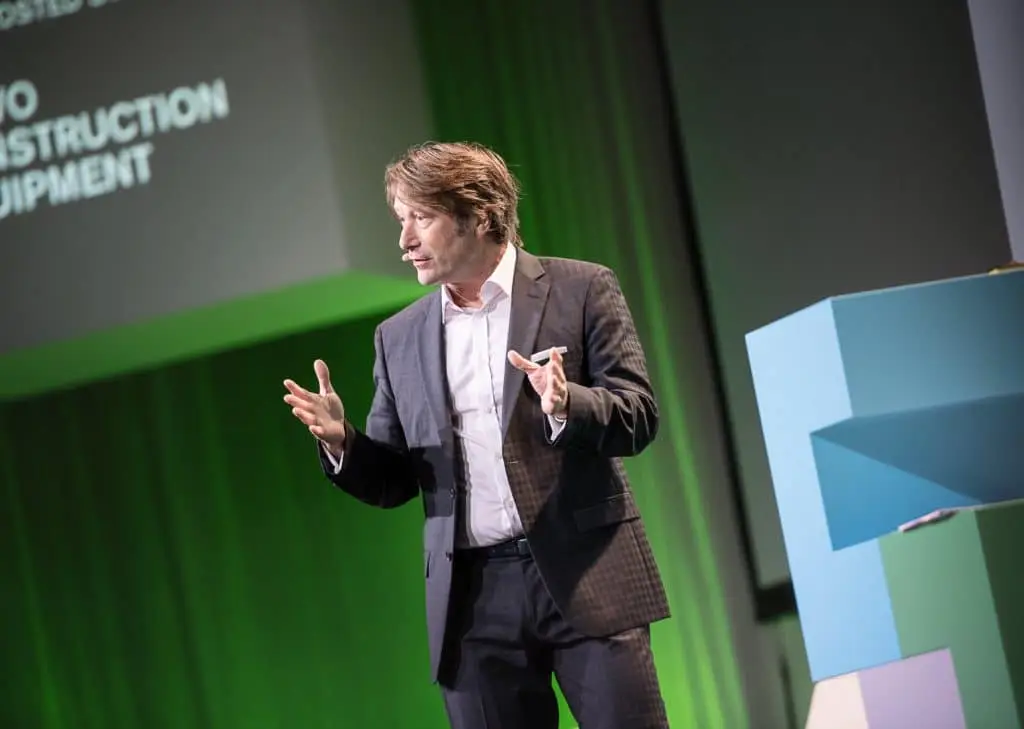
Leadership driving innovation of decarbonisation of new and existing buildings.
When Paul joined Grimshaw in 2019 they had signed up to the climate emergency and with the built environment contributing 40% of the world’s greenhouse emissions cutting carbon emissions was a priority. Paul’s goal was to embed sustainability into the heart of design and create the practice’s first strategy for net-zero carbon and regenerative outcomes. Very quickly, Paul saw a fundamental problem which was industry wide: every project team was using inconsistent guidance and tools, which made comparison, accountability and decision-making almost impossible. Minoro was born from that frustration. Paul wanted a platform that gave users access to credible information for each of the project’s work stages, answering the questions why, what, when and with whom? This makes choices transparent and decisions accountable, treating whole life carbon with the same discipline as cost or programme.
To create Minoro Paul led a global multi-stakeholder consultation with all parts of the value chain – including investors and clients – working across disciplines to create something rigorous yet intuitive. Paul secured investment and endorsement from the World Green Building Council and the World Business Council for Sustainable Development, and it was published in July 2024. For Grimshaw, seeing nearly 70% of projects realise net-zero carbon-ready design through using Minoro was the result of persistent engagement, training and design reviews. For the industry, Minoro is now used in over 109 countries and has over 8000 users who are integrating carbon reductions in their projects. It has won three awards.
For Paul, it represents proof that meaningful change is possible when you give people the right tools and a process to follow.
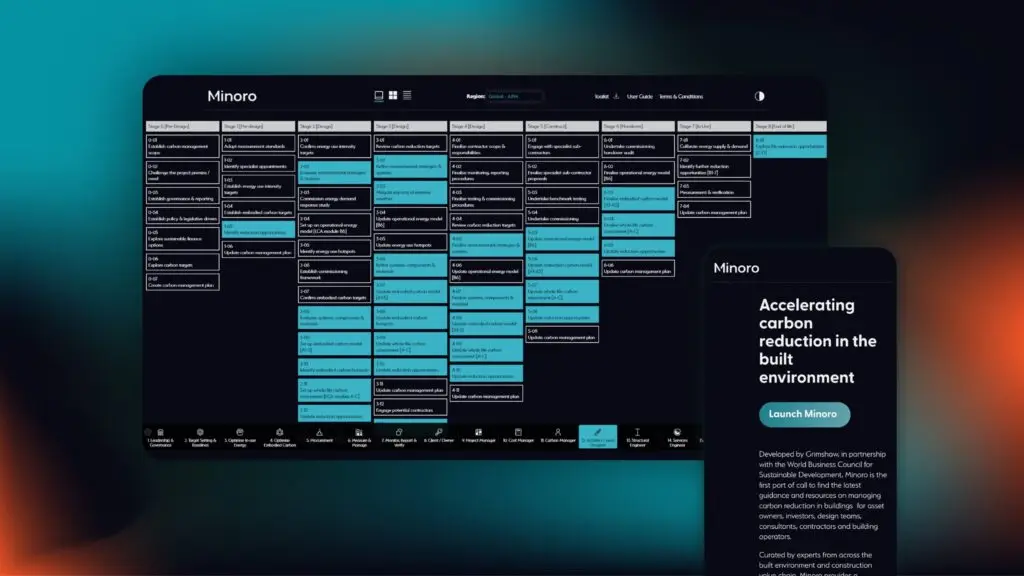
The Minoro decarbonisation pathway highlighting actions and guidance for new and existing buildings.

Paul , on behalf of Grimshaw, collecting the AJ 2025 sustainability initiative award for Minoro: the free web platform that supports climate action for new and existing buildings and infrastructure.
Establishing a vision, underpinned by a strategy, framework and action plans
Paul has advised CEO’s and executives on establishing a vision for what the company is seeking to achieve in the future. This is increasingly common when companies realise the importance of being a purpose driven, values led organisations, what that means to appeal to their customers, employees and local communities in which they operate. Understanding the current and future regulatory drivers Paul helps to facilitate that understanding of a future, regenerative state in their sector and the role of the business in leading that transition – from being less harmful to generating positive outcomes and how to maximise the value in doing so.
Paul has the first-hand experience of doing this as the in-house sustainability director, often establishing the campany’s first strategy. As was the case at Bovis Lendlease, where he developed an award-winning strategy and more recently at Grimshaw. At Balfour Beatty, Paul worked with the New Economics Foundation and brought together the UK businesses to establish an over-arching community investment programme that included skills, training (apprenticeships) and procurement of local suppliers. This approach pioneered social value and positioned the company to successfully win significant government contracts.
In the aviation sector, Paul has developed vision and strategies for airport owners in the UK and overseas. In this growing sector, there is much pressure on owners to both reduce their contribution to greenhouse gas emissions and climate change and focus on passenger experience. Strategies need to first comply to international standards and procedures, for example ICAO and then with Paul’s advice the objectives move beyond compliance.Read about Paul’s thoughts on a sustainable airport of the future – Click Here
Unlocking how business strategies can deliver regenerative outcomes
The current approach to corporate sustainability is not working. Despite all the good intentions our impacts are creating negative impacts on the planet and at a faster rate than the planet can restore its depleted resources. Paul has been part of a vanguard of practitioners and academics exploring regenerative strategies to address this. Paul established a regenerative design approach whilst at Grimshaw based on a set of principles relevant to infrastructure and property design. He arranged for training of its architects with Living Future International Institute and is currently participating on working groups convened by the UK Green Building Council – to establish a regenerative places framework for house builders and Architects Declare to write and publish the next version of the publication Regenerative Primer. Paul regularly speaks about regenerative design and is currently serving a three-year term on the Steering Committee of the charity Living futures Europe – Europe’s premier regenerative design movement. He is currently advising asset owners on regenerative strategies.
Living Futures Europe Steering Committee Anouncement – Click Here